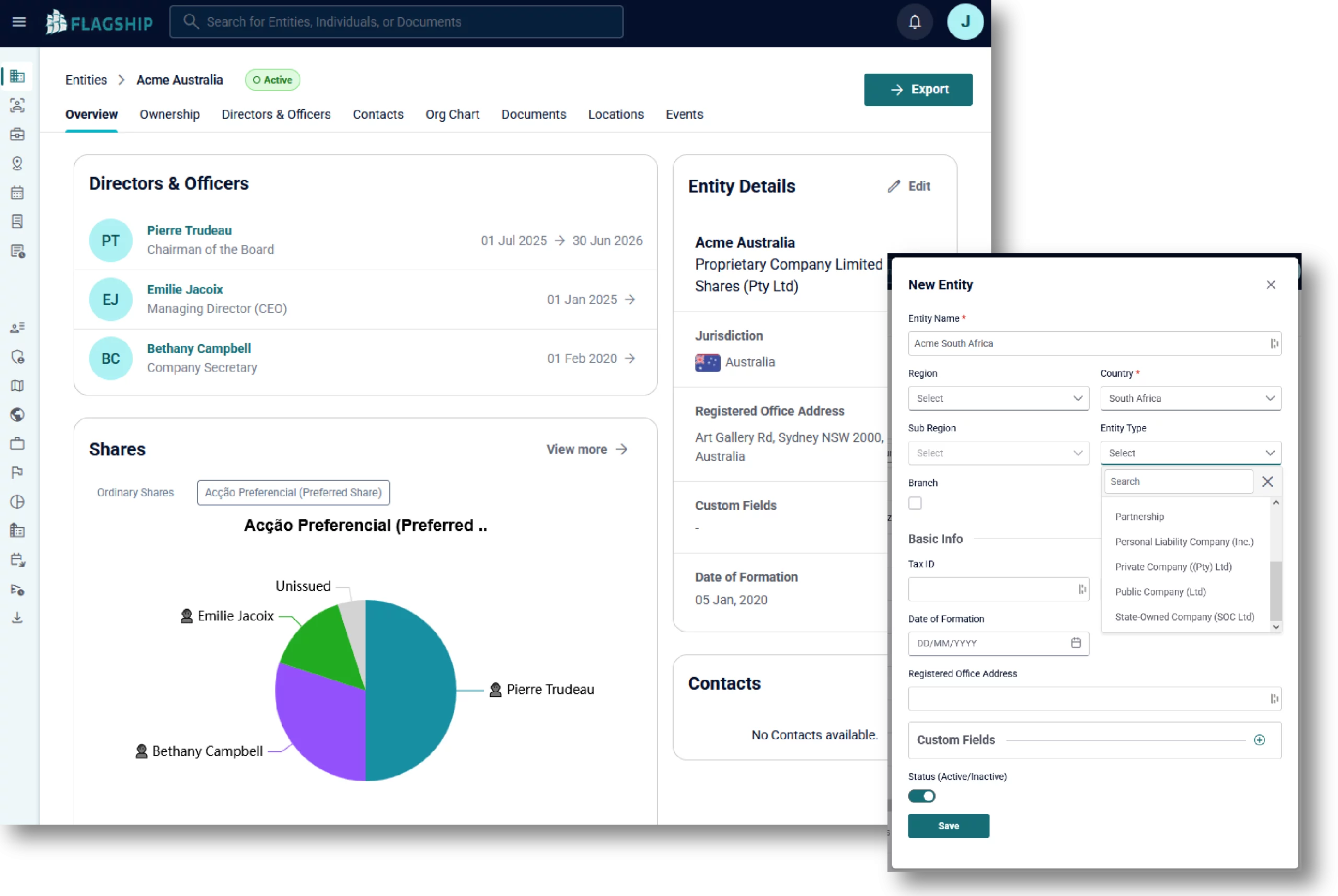
Managing subsidiaries across borders has evolved from routine compliance to a high-stakes balancing act.
- Odyssey
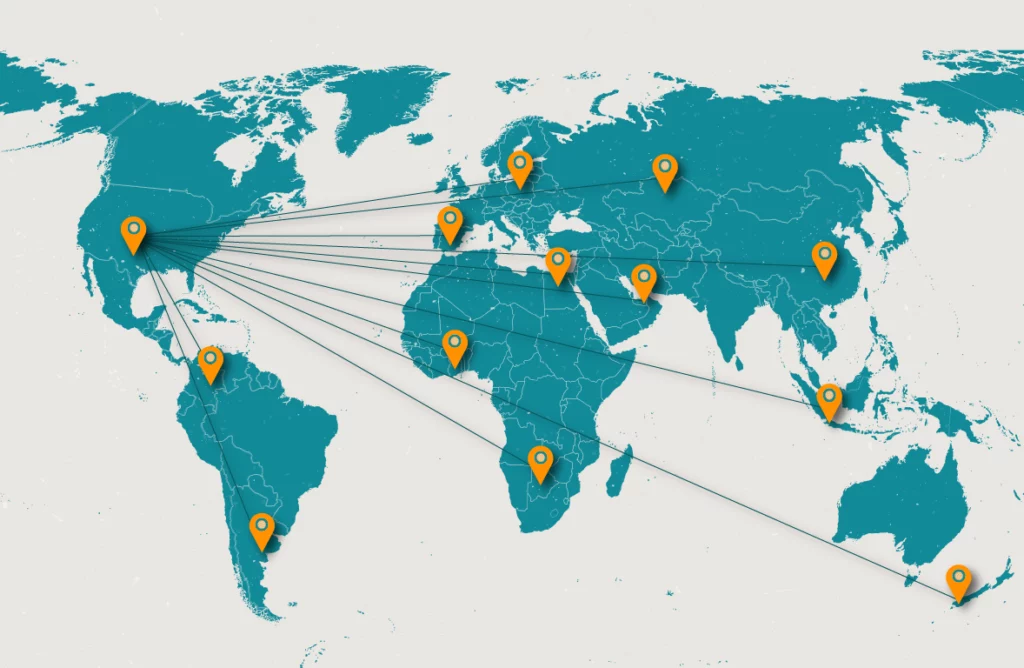
Divergent regulatory demands, particularly around ESG disclosures, create tension between global consistency and local mandates, demanding subsidiary-specific governance frameworks that withstand enforcement scrutiny.
1. The fragmentation challenge: ESG divergence between the US and EU
Generic compliance programs require adjustments in cross-border operations because different jurisdictions imposes different rules. This is especially true for ESG, where 2025 saw a widening gap between US and EU rules and enforcement philosophy, complicating entity-level execution.
EU mandates like CSRD require granular subsidiary-level ESG reporting above certain thresholds (e.g. detailed subsidiary emissions and supply chain due diligence data) while U.S. SEC rules emphasize material risk disclosure without prescriptive metrics.
Multinational corporations find themselves caught between those divergent policy options and regulatory frameworks. This creates cascading risks across entity structures, where inconsistent oversight can lead to fines, disrupted operations, and/or reputational damage.
Subsidiary governance documentation becomes crucial in that context. Board and AGM minutes must explicitly address local ESG metrics while aligning with parent-level strategies. Local governance documentation thus allows US companies to show that their local entities (provided they exceed the relevant thresholds) meet EU requirements and comply with relevant reporting rules.
2. Practical framework for subsidiary-level alignment
Implementing diverging policies at subsidiary level is a challenge for corporations with dozens or hundreds of entities globally. Success boils down to a basic principle : rigid centralization stifles local responsiveness, but decentralized silos invite chaos.
The optimal path centers on tailored frameworks with integrated oversight, positioning subsidiaries as strategy executors amid 2026’s geopolitical flux, enhancing resilience, regulatory compliance and investor trust.
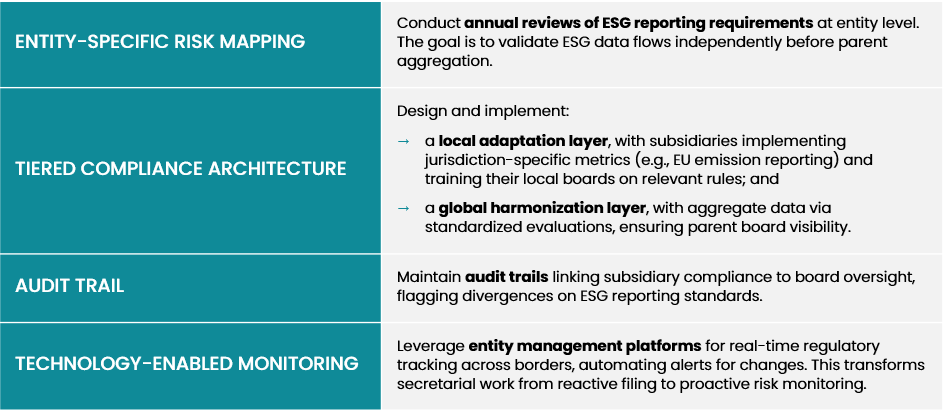
ESG alignment can thus be achieved through a four-tiered approach to harmonize expectations without over-centralization:
3. Strategic reflection: compliance as competitive edge
In fragmented environments, subsidiary governance isn’t merely defensive—it’s a differentiator. Companies excelling here avoid fines while signaling ESG maturity to investors. In-house teams should view 2026’s regulatory divergence as an opportunity to refine entity structures, ensuring subsidiaries operate as agile extensions of the parent rather than compliance silos.
In other words, proactive alignment not only mitigates risk but positions the enterprise for cross-border growth amid geopolitical flux.